Unsold Condos: What a West Vancouver Development Reveals About the Market
In our July 2025 article, about the open letter Crisis & Revitalization of the Real Estate/Construction Industry in BC, we examined concerns about slowing condominium sales, stalled projects and the potential implications for future housing supply.
The issue has continued to attract attention. A September 2026 report by Real Property Data identified more than 5,000 completed, unsold condominiums across Metro Vancouver, representing an estimated $4.45 billion in inventory. While the largest concentrations were in markets such as Burnaby, Vancouver and Surrey, the issue has implications for the region as a whole.
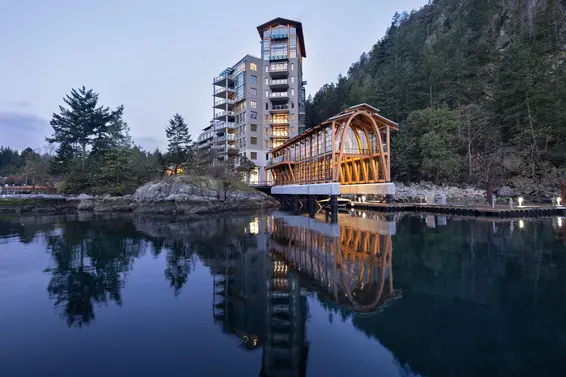
A recent Globe and Mail report highlights another aspect of the problem through a proposed bulk sale of completed, unsold condominiums at Sanctuary, a luxury development in Horseshoe Bay, West Vancouver. The transaction ultimately failed after the project's lender refused to approve the sale, raising questions about the relationship between pricing, developer financing and efforts to clear unsold inventory.
The case also connects to a broader concern raised in our earlier article: while completed homes remain unsold today, weaker presales and delayed projects could constrain the supply of new housing in the years ahead.
When a Discounted Sale Cannot Proceed
Sanctuary, a 158-unit development in West Vancouver, became the subject of a proposed bulk sale in October 2025. A numbered company agreed to purchase 23 completed, unsold units from Westbank for $30 million, with plans to assign some of the units to other buyers.
The transaction did not close as scheduled. According to the Globe and Mail report, the lender, QuadReal Property Group, refused to discharge its mortgage and consent to the sale because the proposed price fell below the minimum amount required under its credit agreement. QuadReal also argued that the proposed prices were significantly below fair market value.
The dispute illustrates a less visible obstacle in the effort to sell unsold condominiums. Construction financing agreements may restrict the prices at which units can be sold without lender approval. Even when a developer is prepared to accept a lower offer, it may not have complete freedom to do so if the proposed sale conflicts with the terms of its financing.
This is an important distinction in the current discussion around unsold inventory. Calls for developers to lower prices assume that reducing the asking price is always an available option. In practice, the situation can be more complicated, particularly where a lender has a financial interest in the proceeds from individual unit sales.
The Sanctuary case does not establish that financing constraints are the main reason completed condominiums remain unsold across Metro Vancouver. Nor does it tell us why buyers have not purchased the remaining units at the prices previously offered. It does, however, demonstrate that the relationship between pricing, demand and the ability to complete a sale is not always straightforward.
What Does This Mean for Buyers?
The Sanctuary case highlights an important distinction between a developer's asking price and what the market is prepared to pay. While the proposed bulk sale was blocked by lender restrictions, the broader question remains: if completed units are not selling at the prices being asked, what would it take to attract buyers?
This is where product-market fit matters. A development can have unsold inventory not simply because buyers cannot access financing or developers are reluctant to discount, but because the homes on offer do not provide sufficient value at their current prices. Unit sizes, layouts, features and overall pricing all influence whether a project meets local demand.
For buyers, a large amount of unsold inventory may create opportunities, but it does not guarantee a bargain. The key is to compare the available units with competing developments and resale properties, and assess whether the pricing reflects what buyers are actually willing to pay. A discount is only meaningful if the property represents good value in the first place.
Today's Unsold Inventory and Tomorrow's Housing Supply
The implications extend beyond the completed homes already on the market. As we discussed in our earlier article, presales help developers secure financing for new condominium projects. When sales weaken, projects may be delayed, scaled back or put on hold.
This creates a potential disconnect: Metro Vancouver can have thousands of completed, unsold condominiums while the pipeline of new housing becomes more constrained. The two conditions can coexist because the number of homes available does not necessarily reflect how well that inventory meets buyer demand, or whether new projects can secure the financing needed to proceed.
For the North Shore, where developable land is limited, this distinction matters. Today's unsold inventory does not necessarily meet the needs or budgets of local buyers, while a slowdown in new development could limit the range of housing delivered in the years ahead.
The challenge is not simply to build more homes or reduce the number of unsold units. It is to bring the right homes to market at prices buyers can support. If developers and policymakers focus only on the headline numbers, they risk overlooking the underlying issues of affordability, product design and project viability that influence both current sales and future supply.
What Presale Buyers Should Consider
These market conditions reinforce the importance of looking beyond a development's marketing materials when considering a presale purchase. The key is to understand how the project fits within the broader market, rather than evaluating it in isolation.
How does the pricing compare with completed condominiums, resale properties and other planned developments? Does the unit mix, size and layout reflect what local buyers are looking for? How much competing inventory is available, and what other projects are expected to complete around the same time? These factors can help buyers assess whether a development is well positioned to attract demand both now and in the future.
The developer's track record, construction progress and the project's overall viability also deserve consideration. Strong initial sales do not guarantee future value, just as a development with unsold units is not necessarily a poor investment. What matters is whether the property offers good value relative to the alternatives and is likely to remain competitive when completed.
These are not always straightforward questions, particularly when committing to a property that may be several years from completion. Our team can help buyers compare developments, assess pricing and market positioning, and better understand the potential risks and opportunities before making a decision.
The broader lesson from the Sanctuary transaction is that pricing, financing and buyer demand are closely connected. Understanding how these factors affect an individual property or development can help buyers make more informed decisions in today's condominium market.
If you are considering a presale or resale condominium on the North Shore, our team can help you evaluate your options and navigate the market with greater confidence. Contact our team of North Shore market experts to discuss your plans.