Real Estate Drone Photos and Neighbour Privacy: What Are Your Rights in BC?
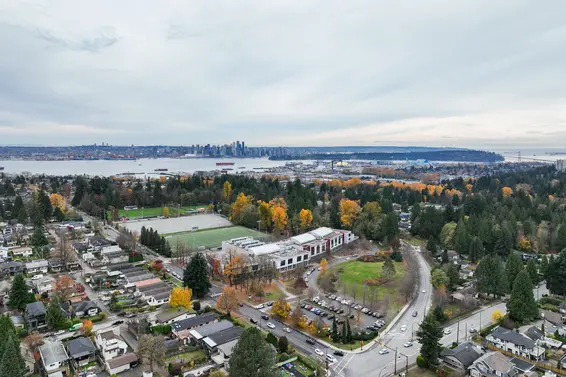
Have you noticed a neighbouring home for sale with listing photographs that show your house, backyard or outdoor living space? With drone photography becoming increasingly common in real estate marketing, it is not unusual for aerial images to capture more than just the property being advertised.
This raises an understandable question: Can a real estate agent photograph your property without permission in British Columbia? And if your home or yard appears in someone else's listing photos, can you ask to have the images removed or blurred?
The answer depends on the circumstances. While BC homeowners have legal protections around privacy, a neighbouring property appearing in a real estate photograph does not automatically constitute a privacy violation. Where the photograph was taken, what it captures and how the images are used can all be relevant.
Here is what homeowners in North and West Vancouver should know about BC privacy laws, drone photography and the rules governing real estate listing photographs.
Can a Real Estate Agent Photograph Your Property Without Permission in BC?
There is no blanket rule in British Columbia that prevents a photographer or real estate agent from capturing a neighbouring property in a photograph taken from a lawful location. Homes, yards and other properties are often visible from public streets and surrounding vantage points, and they may naturally appear in photographs taken to market another property.
For example, an aerial photograph intended to showcase a home's lot, surrounding streetscape or proximity to parks may also include neighbouring houses and yards. Their appearance in the image does not, by itself, mean the photographer has violated anyone's privacy.
However, the circumstances matter. There is a difference between incidentally capturing a neighbouring property in a wider aerial photograph and deliberately photographing someone's private outdoor space, monitoring their activities or recording identifiable individuals.
The use of drones also introduces additional considerations around privacy, trespassing and aviation regulations.
What Does the BC Privacy Act Say About Neighbouring Properties?
British Columbia's Privacy Act provides individuals with legal protection against unreasonable intrusions into their privacy.
Under Section 1 of the Act, it is a civil wrong to wilfully violate another person's privacy without a legal justification. The legislation also recognizes that the level of privacy someone can reasonably expect depends on the circumstances, including the lawful interests of others.
This is an important distinction when considering real estate photography.
A photograph showing a neighbouring house, driveway or yard as part of a wider view of a property for sale is not automatically a violation of privacy. However, deliberately photographing private activities or using a camera to observe areas where someone would reasonably expect privacy could raise different concerns.
The fact that a photograph was taken from a lawful location does not necessarily eliminate privacy considerations. The nature of the photography, what was captured and the circumstances surrounding its use all matter.
The Privacy Act therefore does not give homeowners an automatic right to prevent their property from appearing in photographs, but it does provide protection against certain forms of unreasonable intrusion.
Does the Personal Information Protection Act (PIPA) Apply to Real Estate Photography?
BC's Personal Information Protection Act (PIPA) governs how private-sector organizations, including real estate brokerages, collect, use and disclose personal information.
Personal information generally means information about an identifiable individual. This can include a person's name, address, image or other details that could identify them.
However, there is an important distinction between photographing a building and collecting personal information about the people who live there.
A photograph showing a neighbouring home does not automatically constitute personal information simply because the property can be identified. The circumstances may be different if the image also captures identifiable people, licence plates or other information connected to specific individuals.
PIPA requires organizations to have appropriate purposes for collecting, using and disclosing personal information, with consent generally required unless an exception applies.
For most ordinary real estate aerial photography, the central privacy consideration is whether the images capture identifiable individuals or other personal information, rather than simply showing neighbouring buildings.
What Does BCFSA Say About Drone Photography?
The British Columbia Financial Services Authority (BCFSA) regulates real estate professionals in the province and has specifically addressed the privacy risks associated with drone photography.
In an August 2019 Report from Council, the former Real Estate Council of BC, now BCFSA, reminded real estate professionals that drones equipped with cameras can potentially infringe on the privacy rights of neighbouring property owners.
The guidance recommended that real estate professionals inform neighbouring property owners and seek their permission before photographing listings from the air.
This is worth noting for homeowners who discover their property in a neighbouring listing. Although the recommendation does not establish a blanket legal requirement to obtain permission before every aerial photograph, it demonstrates that the regulator expects real estate professionals to consider the privacy implications of drone photography.
Drone operators must also follow applicable Transport Canada requirements, including rules governing where and how drones can be operated. Compliance with aviation regulations does not eliminate the need to respect applicable privacy and trespassing laws.
Transport Canada also provides privacy guidelines for drone users, including guidance on limiting the collection of personal information and responding to privacy concerns.
Does Greater Vancouver REALTORS® Require Neighbouring Properties to Be Blurred?
Greater Vancouver REALTORS® (GVR), which operates the MLS® system for its members, also has rules governing photographs submitted with real estate listings.
Section 3.25 of the GVR Rules of Cooperation addresses photographs, pictures and sketches. It states that images submitted to the Board must relate to the real property being marketed and gives the Board discretion to remove images it considers inappropriate.
The rule does not specifically require neighbouring properties to be blurred or cropped out of listing photographs.
Aerial photography can be a useful part of marketing a home, particularly when showing lot size, the surrounding neighbourhood, nearby parks or the property's setting. Neighbouring homes may naturally appear in these wider views.
However, GVR does have discretion over the images displayed through its MLS® system. Photographs must be appropriate and relate to the property being marketed.
It is also important to distinguish between MLS® rules and privacy legislation. GVR's rules govern the use of images on its listing system, while questions about privacy may involve separate legal considerations.
Can You Ask a Real Estate Agent to Remove or Blur Your Property?
Yes. If you notice that your home, yard or other part of your property appears in photographs used to advertise a neighbouring property, you can contact the listing agent and explain your concerns.
You can ask whether the images can be cropped, blurred or replaced with alternative photographs. The agent can review the images and discuss the request with the photographer and seller.
Whether the agent is legally required to make those changes will depend on the circumstances. Simply appearing in an aerial photograph does not automatically give a neighbouring homeowner the right to have the image removed.
That said, an agent may be willing to accommodate a reasonable request, particularly if the neighbouring property is prominently featured or an alternative image is available.
There is also a practical difference between a photograph showing a neighbouring home in the background and one that prominently captures a private backyard, patio or identifiable individuals.
Even where there is no apparent legal obligation to alter an image, addressing a neighbour's concerns can often be a straightforward way to resolve the matter.
What Should You Do If Your Property Appears in a Real Estate Listing?
If you are concerned about aerial or drone photographs used to market a neighbouring property in North or West Vancouver, the best first step is to contact the listing agent directly.
Explain which photographs concern you and why. The agent can review the images, discuss the circumstances with the photographer and determine whether cropping, blurring or using alternative images is practical.
If you believe the photography involved an unreasonable intrusion into your privacy, you may also wish to seek independent legal advice. Depending on the nature of the concern, the BC Office of the Information and Privacy Commissioner may be relevant to complaints involving personal information, while BCFSA and Greater Vancouver REALTORS® have separate roles in overseeing real estate professionals and MLS® requirements.
Ultimately, aerial photography is a useful marketing tool that helps buyers better understand a property's setting and surroundings. Its use should be balanced with reasonable consideration for neighbouring homeowners and their privacy.
If you notice your property appearing in photographs used to market a neighbouring home, we encourage you to bring your concerns directly to the listing agent. A conversation is often the simplest way to understand the circumstances and determine whether an adjustment can be made.