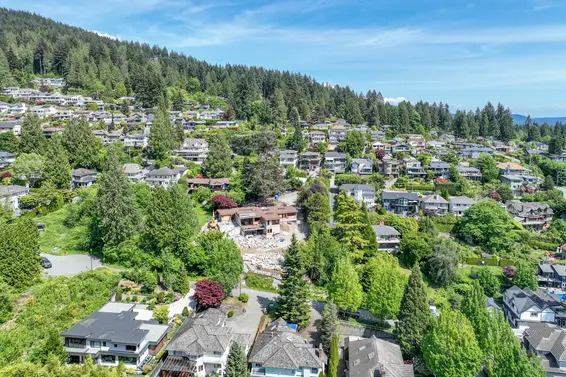
District of North Vancouver Zoning Changes: What the New R1 and R2 Zones Mean for Homeowners
The District of North Vancouver has adopted significant changes to its zoning regulations for detached residential properties, introducing two new residential zones that replace many of the District's previous single-family zoning designations.
On July 20, 2026, District of North Vancouver Council adopted Rezoning Bylaw 8799 and Official Community Plan Amendment Bylaw 8787, bringing the new R1 and R2 detached residential zones into effect.
For homeowners, buyers and sellers, the change is intended to simplify the District's zoning regulations while maintaining existing development opportunities and providing greater flexibility for many single-family properties.
But what does the change actually mean for your property?
What changed with the District of North Vancouver zoning bylaw?
Historically, detached residential properties in the District of North Vancouver were governed by a variety of different RS zoning designations. The District's zoning rewrite consolidates many of those regulations into two new zones:
- R1 – Rural and Suburban Detached Residential Zone
- R2 – Urban Detached Residential Zone
According to the District, the new R1 and R2 zones replace 19 existing single-family zones and are intended to simplify the regulations governing detached residential properties.
The R1 zone is primarily intended for lower-density properties outside the Urban Containment Boundary, while R2 applies to detached residential properties within the urban area.
The District's zoning materials indicate that approximately 219 properties are being placed into the R1 zone, while approximately 19,693 properties within the Urban Containment Boundary are being placed into R2.
What is the R1 zone in North Vancouver?
The R1 – Rural and Suburban Detached Residential Zone applies primarily to properties outside the Urban Containment Boundary.
Under the new R1 regulations, a property can have:
- One principal dwelling
- One secondary suite
- A home occupation, subject to the applicable regulations
Unlike R2, the R1 zone does not provide for a coach house.
The new R1 regulations establish standardized rules for matters such as building size, height, setbacks, building coverage and landscaping. For example, the maximum permitted gross floor area is calculated based on the size of the lot, with a maximum of 650.3 m² (7,000 sq. ft.).
The new regulations also establish maximum building heights of up to three storeys for portions of a principal building outside the front 6.1 metres of the lot, subject to the applicable roof pitch and height requirements.
What is the R2 zone in North Vancouver?
The R2 – Urban Detached Residential Zone applies to detached residential properties within the District's Urban Containment Boundary.
For many North Vancouver homeowners, this will be the more relevant of the two new zones.
R2 permits:
- One principal dwelling
- One secondary suite
- One coach house
This means that, where all applicable requirements can be met, an R2 property can accommodate a principal home, a secondary suite and a detached coach house.
The new R2 regulations also establish standardized requirements for building size, height, setbacks, lot coverage, landscaping and other development considerations.
For example, a coach house can have a maximum gross floor area of 130.1 m² (1,400 sq. ft.), while the maximum combined gross floor area for a lot with a principal building and coach house can be as high as 696.8 m² (7,500 sq. ft.), depending on lot size and the applicable calculations.
Can I Subdivide My North Vancouver Property Under the New Zoning?
One of the questions homeowners may have about the new District of North Vancouver zoning is whether the R1 and R2 changes make it easier to subdivide a property.
The answer is: potentially, but subdivision is not automatically permitted on every R1 or R2 property.
The new zoning bylaw establishes minimum lot sizes and dimensions for properties created through subdivision. However, the requirements vary depending on the property's zoning and, in some cases, a subdivision modifier shown on the District's zoning map.
R1 subdivision requirements
For properties in the R1 – Rural and Suburban Detached Residential Zone, the base minimum for subdivision is:
- 4,000 m² (43,056 sq. ft.) minimum lot area
- 30 metres (98.4 ft.) minimum lot width
- 34 metres (111.6 ft.) minimum lot depth
The District has noted that, outside the Urban Containment Boundary, existing Council policies continue to discourage subdivision, even though the new zoning establishes a 4,000 m² minimum lot size.
R2 subdivision requirements
For properties in the R2 – Urban Detached Residential Zone, the base subdivision standard is:
- 660 m² (7,104 sq. ft.) minimum lot area
- 18 metres (59.1 ft.) minimum lot width
- 34 metres (111.6 ft.) minimum lot depth
However, some R2 properties have a subdivision modifier that changes these requirements. The District's zoning map identifies these modifiers as S1, S2 or S3.
The applicable standards are:
| R2 designation | Minimum lot area | Minimum width | Minimum depth |
|---|---|---|---|
| R2 | 660 m² (7,104 sq. ft.) | 18 m (59.1 ft.) | 34 m (111.6 ft.) |
| R2 (S1) | 335 m² (3,605 sq. ft.) | 10 m (32.8 ft.) | 34 m (111.6 ft.) |
| R2 (S2) | 1,100 m² (11,840 sq. ft.) | 24 m (78.7 ft.) | 34 m (111.6 ft.) |
| R2 (S3) | 4,000 m² (43,056 sq. ft.) | 30 m (98.4 ft.) | 34 m (111.6 ft.) |
These modifiers are important because they can make a substantial difference to a property's potential for subdivision. An R2 (S1) property, for example, has a much smaller minimum lot area than a standard R2 property. The District explains that the (S) modifier denotes the applicable minimum subdivision requirements and that the S1, S2 or S3 designation shown on the zoning map determines which standard applies.
A larger lot does not automatically mean it can be subdivided
It is also important not to assume that a property can simply be divided once it is large enough.
The minimum requirements apply to each lot created by the subdivision. For example, a property being considered for a two-lot subdivision under the standard R2 requirements would need enough land for two lots that each meet the applicable minimum lot area, width and depth requirements. The District specifically notes that a two-lot subdivision therefore requires at least twice the minimum lot area shown in the applicable table.
The shape and dimensions of the property also matter. A lot may have sufficient overall square footage but still not be capable of creating two lots that meet the required width and depth.
Other factors can also affect whether a proposed subdivision is feasible, including access, existing buildings, servicing, easements, topography and other applicable regulations and requirements.
In other words, R1 or R2 zoning should not be interpreted as a blanket permission to subdivide. The zoning provides the framework and minimum requirements, but the actual subdivision potential of a particular property needs to be evaluated on a site-specific basis.
Why subdivision potential matters to North Vancouver real estate
Subdivision potential can be an important consideration when buying or selling a detached property in the District of North Vancouver.
A property that can potentially be divided into two lots may appeal to a different group of buyers than a similar property that cannot be subdivided. However, determining whether a property is actually subdividable requires more than simply looking at its total lot size or zoning designation.
If you are considering buying a property because of its potential to subdivide, or selling a property that may have subdivision potential, it is important to understand the specific zoning, subdivision modifier, lot dimensions and other site characteristics before placing a value on that potential.
For a preliminary check, you can look up your property's zoning and any subdivision modifier through the District of North Vancouver's GEOweb mapping system.
Check your property on District of North Vancouver GEOweb
UPDATE TO “Does the New Zoning Mean I Can Build More?”
Does the new zoning mean I can build more?
Not necessarily.
This is one of the most important points for homeowners to understand.
The introduction of R1 and R2 does not mean that every property can suddenly be developed to the maximum permitted under the new regulations. The actual development potential of an individual property depends on a number of factors, including:
- Lot size and dimensions
- Existing buildings
- Lot configuration
- Setbacks
- Building coverage
- Building height
- Landscaping requirements
- Any applicable subdivision modifier
- Topography
- Easements and rights-of-way
- Environmental constraints
- Other applicable District regulations
The new zoning bylaw provides a more standardized framework, but the development potential of one property can be very different from another property with the same zoning designation.
This is particularly important when considering subdivision. An R2 property may have the standard R2 subdivision requirements, or it may be subject to an S1, S2 or S3 modifier that changes the minimum lot size and dimensions required for subdivision.
Similarly, having a sufficiently large lot does not automatically mean it can be subdivided. Each proposed new lot must satisfy the applicable minimum requirements, and other site-specific considerations may also affect whether a subdivision is feasible.
In other words, knowing that a property is zoned R2 is a useful starting point, but it is not the same as knowing exactly what can be built or whether the property can be subdivided.
For buyers and sellers, this distinction is important because development or subdivision potential can influence how a property is perceived in the market, but that potential should be assessed on a property-by-property basis.
Does the new zoning mean I can build more?
Not necessarily.
This is one of the most important points for homeowners to understand.
The introduction of R1 and R2 does not mean that every property can suddenly be developed to the maximum permitted under the new regulations. The actual development potential of an individual property depends on a number of factors, including:
- Lot size and dimensions
- Existing buildings
- Lot configuration
- Setbacks
- Building coverage
- Building height
- Landscaping requirements
- Any applicable subdivision modifier
- Topography
- Easements and rights-of-way
- Environmental constraints
- Other applicable District regulations
The new zoning bylaw provides a more standardized framework, but the development potential of one property can be very different from another property with the same zoning designation.
This is particularly important when considering subdivision. An R2 property may have the standard R2 subdivision requirements, or it may be subject to an S1, S2 or S3 modifier that changes the minimum lot size and dimensions required for subdivision.
Similarly, having a sufficiently large lot does not automatically mean it can be subdivided. Each proposed new lot must satisfy the applicable minimum requirements, and other site-specific considerations may also affect whether a subdivision is feasible.
In other words, knowing that a property is zoned R2 is a useful starting point, but it is not the same as knowing exactly what can be built or whether the property can be subdivided.
For buyers and sellers, this distinction is important because development or subdivision potential can influence how a property is perceived in the market, but that potential should be assessed on a property-by-property basis.
What does this mean for existing homes?
For many homeowners, the immediate impact of the zoning rewrite may be relatively limited.
The District has described the new zones as a way to simplify regulations, maintain current building allowances and introduce greater flexibility rather than fundamentally changing the character of every detached residential property.
However, the changes may be particularly relevant if you are considering:
- Building a new home
- Renovating or substantially rebuilding
- Adding a secondary suite
- Building a coach house
- Exploring future development potential
- Subdividing a property
- Buying a property because of its development potential
The new regulations provide a clearer framework for understanding these opportunities.
How do I find out what my North Vancouver property is zoned?
The easiest place to start is the District of North Vancouver's GEOweb.
The District's GEOweb system provides public access to information about properties throughout the District, including zoning and other land-use information.
Check your property's zoning:
District of North Vancouver GEOweb
You can search for your property and determine whether it is designated R1, R2 or another zoning designation.
It is also important to check whether your property has a subdivision modifier. Under the new R1 and R2 regulations, modifiers shown on the zoning map can change the minimum subdivision requirements that apply to a property.
How could the new zoning affect my property value?
This is where the answer becomes more property-specific.
Zoning can be an important component of residential real estate value, particularly for detached homes where buyers may place a premium on future development or redevelopment potential.
However, zoning alone does not determine a property's value.
Two homes with the same R2 zoning could have substantially different values because of differences in:
- Lot size
- Lot width and configuration
- Location
- Topography
- Existing home
- Views
- Condition
- Development constraints
- Existing improvements
- Neighbourhood characteristics
- Buyer demand
For some properties, the new zoning may provide greater clarity around development opportunities. For others, the practical development potential may be largely unchanged.
This is why it is important to look beyond the zoning designation itself and understand what the zoning actually allows on a particular property and how buyers in the North Vancouver market may perceive that potential.
What should North Vancouver homeowners do now?
If you own a detached home in the District of North Vancouver, it is worth taking a few minutes to understand your property's new zoning designation.
Start by checking your property on GEOweb and identifying whether it is now classified as R1 or R2.
If you are considering a renovation, redevelopment, coach house, suite or future sale, you may also want to review the detailed R1 and R2 regulations before making decisions.
The District has published a detailed guide to the new regulations, including requirements for permitted uses, density, gross floor area, building height, setbacks, building coverage, landscaping and subdivision.
View the District of North Vancouver's R1 and R2 zoning guide:
R1 and R2 Zoning Guide – District of North Vancouver
Thinking About Buying or Selling a Home in North Vancouver?
Zoning is increasingly important when evaluating detached homes in North Vancouver real estate.
If you are thinking about buying a home, understanding the property's zoning and potential development opportunities can help you make a more informed decision. If you are selling, understanding how the property's zoning and development potential may be viewed by prospective buyers can be an important part of determining how to position the property in the market.
At Rossetti Realty, we can help you understand how the new District of North Vancouver zoning regulations may apply to a particular property and what they could mean from a real estate perspective.
If you have questions about the new R1 and R2 zoning changes, are curious about the development potential of your property, or are considering buying or selling a home in the District of North Vancouver, contact our team. We'd be happy to help you understand the changes and how they may affect your real estate plans.
Official District of North Vancouver Resources
For the latest information and detailed regulations, we recommend referring directly to the District of North Vancouver:
- District of North Vancouver – Zoning Bylaw Rewrite
- District of North Vancouver GEOweb – Property and Zoning Information
- R1 and R2 Zoning Guide – Section 525 of Bylaw 3210
This article is intended as a general overview of the District of North Vancouver's new R1 and R2 zoning regulations and should not be relied upon as legal, planning or development advice. Specific development potential should be confirmed with the District of North Vancouver and appropriate professionals.