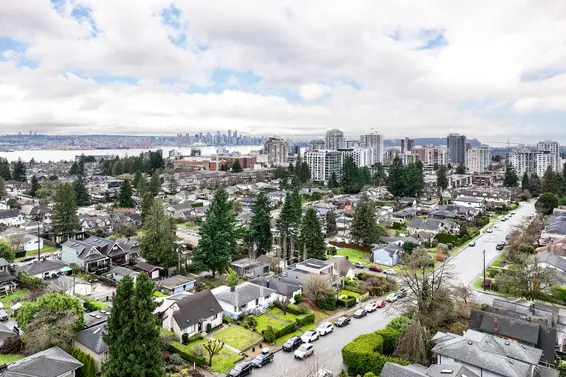
City of North Vancouver Prepares Next Round of Multiplex Zoning Changes
The City of North Vancouver is moving into its next phase of zoning reform as it works to comply with evolving provincial housing legislation aimed at increasing small-scale, multi-unit housing. After adopting earlier zoning changes in late 2025, the City is now advancing additional updates that could allow up to six units on nearly 2,000 more properties, particularly near frequent transit routes.
These changes follow new provincial requirements that tighten rules around how municipalities must enable multiplex housing and remove previous loopholes that limited uptake.
What the City Has Already Done
In December 2025, Council adopted new Ground-Oriented Housing and small-scale multi-unit housing regulations to meet provincial mandates for long-term housing capacity. Those bylaws permitted up to four units on more than 4,000 properties, helping the City demonstrate it has enough zoned capacity to meet projected housing needs over the next 20 years.
However, while those changes satisfied earlier provincial rules, they did not fully align with newer legislation introduced by the Province, which now requires municipalities to go further, especially in transit-accessible areas.
Why More Changes Are Required
Under updated provincial legislation, municipalities must allow up to six units on lots located within 400 metres of frequent transit routes. This requirement is intended to support higher-density housing in walkable, transit-oriented neighbourhoods and remove regulatory barriers that previously made multiplex projects difficult or unviable.
For the City of North Vancouver, this means expanding six-unit zoning to approximately 1,940 additional properties, primarily along the R2 and 240 bus corridors. Affected neighbourhoods include areas around Grand Boulevard, Keith Lynn, Moodyville, and Mahon Park.
To avoid uneven development patterns on individual streets, the City is proposing a “consistent block” approach, where entire blocks may be rezoned even if only some lots fall within the strict 400-metre transit radius.
Parking, Height, and Design Rules
As required by the Province, the City must also eliminate minimum on-site parking requirements for new six-unit multiplex zones. While parking will no longer be mandatory, developers may still choose to include it where feasible.
New multiplex buildings would be limited to three storeys in height, including the basement level, maintaining a scale similar to existing ground-oriented housing forms.
Importantly, the City retains control over design guidelines, and upcoming public engagement will focus heavily on how new multiplex housing can be designed to fit into established neighbourhoods—particularly in areas with heritage homes.
Heritage Areas Back Under Review
The new rules also apply to roughly 410 additional lots, including properties previously excluded from small-scale multi-unit housing due to heritage considerations. These include portions of Grand Boulevard and parts of East 10th and East 19th Streets.
The City has indicated that upcoming consultation will explore ways to retain and adapt existing heritage homes within multiplex zoning, rather than requiring demolition.
Timeline and Public Input
Council voted in late January 2026 to advance the new zoning process. While the Province has set a June 30 deadline for adoption, the changes will still go through public consultation and a formal public hearing, with Council expected to vote in June.
City leaders have expressed mixed feelings about the pace of change, balancing frustration over repeated legislative revisions with recognition of the long-term need for housing. There is also acknowledgment that redevelopment is likely to occur gradually over many years, rather than all at once.
What This Means for Residents and Property Owners
For homeowners, the proposed changes could significantly expand redevelopment options—especially for properties near frequent transit. At the same time, the City continues to shape how multiplex housing will look, function, and integrate into existing neighbourhoods.
As North Vancouver works through this next stage of zoning reform, residents are encouraged to stay informed and participate in upcoming engagement opportunities that will influence how these new rules are implemented on the ground.